As soon as the police treat you as a suspect, you have three core rights: you must be told what you are suspected of, you are not obliged to answer, and you may consult a lawyer before the first interview and have that lawyer present during it. These rules are in the Dutch Code of Criminal Procedure (Wetboek van Strafvordering, Sv) and have applied in their current form since 1 March 2017; the main exception is that the right to silence does not cover your identity or evidence that exists independently of your will.
This article covers the interview itself. For when you become a suspect, read mikor gyanúsított vagy, és milyen következményekkel jár?; for the practical course of an interview, see mire számíthatunk egy rendőrségi kihallgatáson.
When do your rights as a suspect start?
They start when there is a reasonable suspicion that you committed an offence (Article 27 Sv). You do not need to be arrested: a suspect who comes to the station voluntarily has the same right to be informed and the same right to silence.
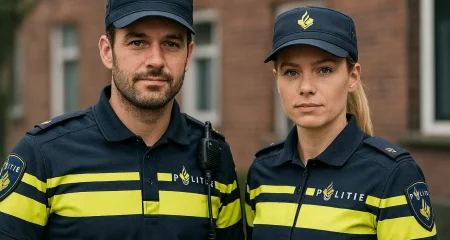
The authority asking the questions makes no difference. The police, the Royal Netherlands Marechaussee, the FIOD in tax and financial cases and other special investigating officers all work under the same Code of Criminal Procedure. If you are unsure of your position, ask two questions: am I a suspect, and am I free to leave?
What must the police tell you before the interview?
Before the first interview, the police must tell you which offence you are suspected of and caution you that you are not obliged to answer (Article 29 Sv). The same article forbids any pressure aimed at a statement that is not given freely, such as threats or promises of a lighter outcome.
Article 27c Sv adds a duty to inform you of your right to a lawyer, to an interpreter and to have someone notified of your detention. A detained suspect receives a written letter of rights. A missing or late caution is a procedural defect that your lawyer can raise before the court.
When can you speak to a lawyer?
Every suspect has the right to be assisted by a lawyer (Article 28 Sv). Before the first interview you may consult your lawyer for up to 30 minutes, which the police may extend by up to another 30 minutes on request (Article 28c Sv).
How the lawyer is arranged depends on the case. For a vulnerable suspect, or for a suspected offence carrying twelve years’ imprisonment or more, the police notify the Legal Aid Board (Raad voor Rechtsbijstand) straight away so that a duty lawyer is assigned. The same applies to a suspect arrested for an offence that allows pre-trial detention who asks for a lawyer (Article 28b Sv). In other cases you contact a lawyer of your own choice.
You can waive legal assistance, but only voluntarily and unambiguously, after being told the consequences, and the waiver is recorded (Article 28a Sv). You may waive the consultation itself only after a lawyer has explained the consequences to you (Article 28c(2) Sv).
These rights go back to the Supreme Court’s Salduz judgment (HR 30 June 2009, ECLI:NL:HR:2009:BH3079). In 2017 the legislature codified them, implementing EU Directive 2013/48/EU on access to a lawyer.
Mit tehet az ügyvédje a kihallgatás során?
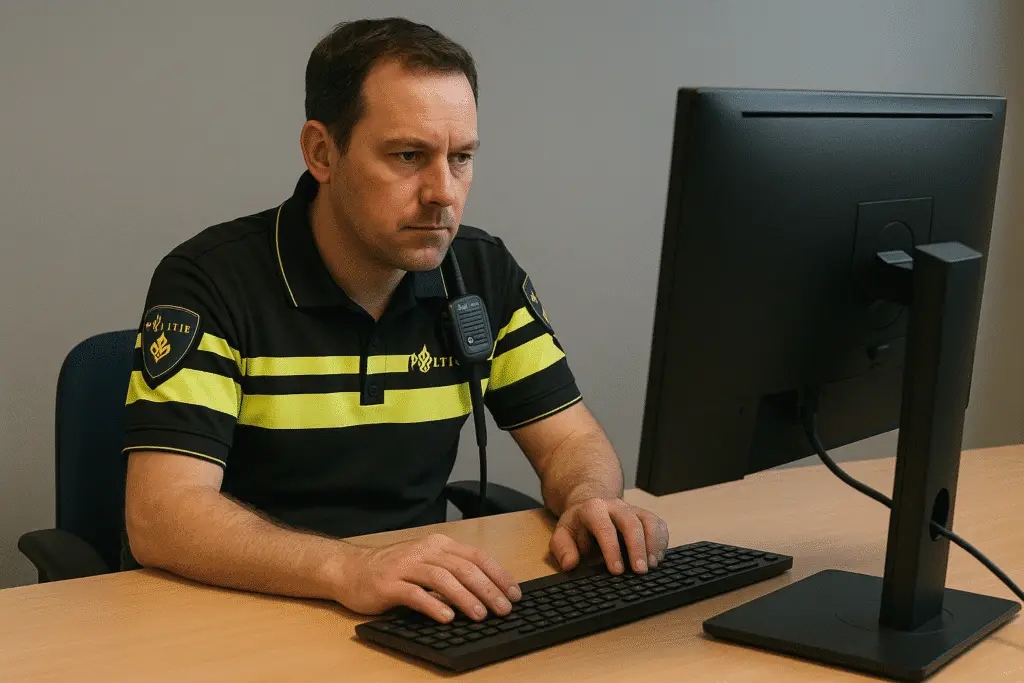
On request, your lawyer may attend the interview and take part in it (Article 28d Sv). This is called interrogation assistance (verhoorbijstand), and the details are set out in the Decree on the conduct of police interviews (Besluit inrichting en orde politieverhoor).
Your lawyer may make remarks and ask questions at the start and end, ask for a break to consult you, and point out that a question is unclear or that you are not fit to be questioned. The officer may refuse repeated requests for breaks that disrupt the interview; that refusal must be recorded with reasons.
Ask for interrogation assistance explicitly and before questioning starts. Under Article 28e Sv the police may only start without a lawyer in urgent cases, to prevent serious harm to someone’s life, liberty or physical integrity or significant harm to the investigation, and in most cases only with the public prosecutor’s consent.
How far does the right to silence go?
You cannot be forced to answer questions about the offence, and you cannot be punished for staying silent. You invoke it with one sentence, in Dutch if you wish: “ik beroep mij op mijn zwijgrecht”.
The right has three limits that you should know in advance.
- Silence can play a role at trial. A court may not treat silence as proof of guilt, but where the evidence clearly calls for an explanation, the absence of one may be taken into account.
- Identity and physical evidence are not covered. You must state your name and show a valid ID when lawfully asked. Fingerprints, DNA taken under a statutory power and existing documents fall outside the right. Refusing a breath or blood test under the Road Traffic Act 1994 (Wegenverkeerswet 1994) is a separate offence.
- Witnesses are in a different position. A witness is in principle obliged to answer. If you become a suspect during a conversation, the officer must stop, caution you and offer you a lawyer.
The right to silence does not allow you to mislead. Giving a false name or tampering with evidence are separate offences that make the case against you worse.
Meddig tarthat fogva a rendőrség kihallgatás céljából?
After arrest, an assistant public prosecutor (hulpofficier van justitie) decides whether you are released or held for questioning (ophouden voor onderzoek). Under Article 56a Sv this lasts at most nine hours, or six hours for an offence for which pre-trial detention is not allowed; the hours between midnight and 9 a.m. do not count.
After that, you are released or placed in police custody (inverzekeringstelling) for up to three days, which can be extended once by up to three days. Within three days and eighteen hours of arrest, you must be brought before the examining magistrate (rechter-commissaris), who reviews the lawfulness of your detention (Article 59a Sv).
Article 29a Sv requires the interview record to state when the interview started, was interrupted and ended, and who was present. For the full rules on detention, see letartóztatás és rendőrségi őrizet Hollandiában és a Holland büntetőeljárás a nyomozástól az ítéletig.
Which extra safeguards apply to minors and vulnerable suspects?
A suspect under 18 is assisted by a lawyer and cannot waive the consultation before the first interview. These rules follow EU Directive 2016/800 on procedural safeguards for children who are suspects.
A suspect with a cognitive or psychiatric impairment, or who is ill or intoxicated, may be unable to follow the questions. The police must then arrange support, and a lawyer or doctor can insist that the interview is postponed. If you do not speak Dutch well enough, you are entitled to a qualified interpreter at no cost to you.
What happens if the police break the rules?
The court treats a breach as a procedural defect (Article 359a Sv). Depending on its seriousness, the court can note the defect, reduce the sentence or exclude the evidence; exclusion is not automatic.
Read the record before you sign it and have corrections noted (Article 29a Sv); you are not obliged to sign. A complaint about how officers treated you goes to the police force and then to the National Ombudsman. If your case ends without a penalty, you can claim compensation for time spent in custody under Article 533 Sv within three months of the case being closed.
Mit kell ellenőrizni gyanúsítottként?
Most mistakes happen in the first hours. These checks protect your position before and during the interview.
- Ask whether you are a suspect and what offence you are suspected of.
- Ask for a lawyer before answering anything of substance, and for that lawyer to attend the interview.
- Note the time of your arrest and of each interview; the statutory periods run from those moments.
- Ask for an interpreter if you do not fully understand Dutch.
- Say if you are ill, on medication or have not slept, and make sure it is recorded.
- Read the record carefully and correct it before you decide whether to sign.
What should you check if someone close to you is arrested?
You cannot attend the interview, but you can make sure the suspect gets help quickly. The suspect is entitled to have one person notified of the detention.
- Find out at which police station the person is held.
- Give the police the name of the lawyer the suspect wants, so that lawyer is called instead of the duty lawyer.
- Pass on information about medication, health or a language barrier.
- Keep track of the three days and eighteen hours within which the examining magistrate must review the detention.
What can we do for you with a police interrogation?
termékeink büntetőjogi csapat assists suspects from the first telephone call, including at the police station.
- We consult with you before the first interview and assess the accusation with you.
- We attend the interview and object to improper questioning.
- We check the interview record and the lawfulness of your detention.
- We appear before the examining magistrate when your detention is reviewed.
- We claim compensation under Article 533 Sv if your case ends without a penalty.
Összegzésként
- As a suspect you must be told the accusation and cautioned that you need not answer (Article 29 Sv).
- You may consult a lawyer for up to 30 minutes before the first interview (Article 28c Sv) and have a lawyer present on request (Article 28d Sv).
- The right to silence does not cover your identity, a breath or blood test, or physical evidence.
- Holding for questioning lasts at most nine hours, not counting midnight to 9 a.m.; the examining magistrate must review custody within three days and eighteen hours.
Gyakran Ismételt Kérdések
Which rights apply the moment I am told I am a suspect?
You must be told what you are suspected of, you are not obliged to answer (Article 29 Sv), and you may consult a lawyer before the first interview and have a lawyer present during it.
Does it matter whether I am questioned as a suspect or as a witness?
Yes. A suspect may remain silent and ask for a lawyer. A witness is in principle obliged to answer, although some people, such as close relatives, may refuse.
Do these rights also apply when the FIOD or the Marechaussee questions me?
Yes. All investigating authorities, including the Royal Netherlands Marechaussee and the FIOD, work under the same Code of Criminal Procedure.
Do I have to sign the interview record?
No. You may read the record, have corrections and comments noted under Article 29a Sv, and refuse to sign it.